
Who Is Tom Tokita?
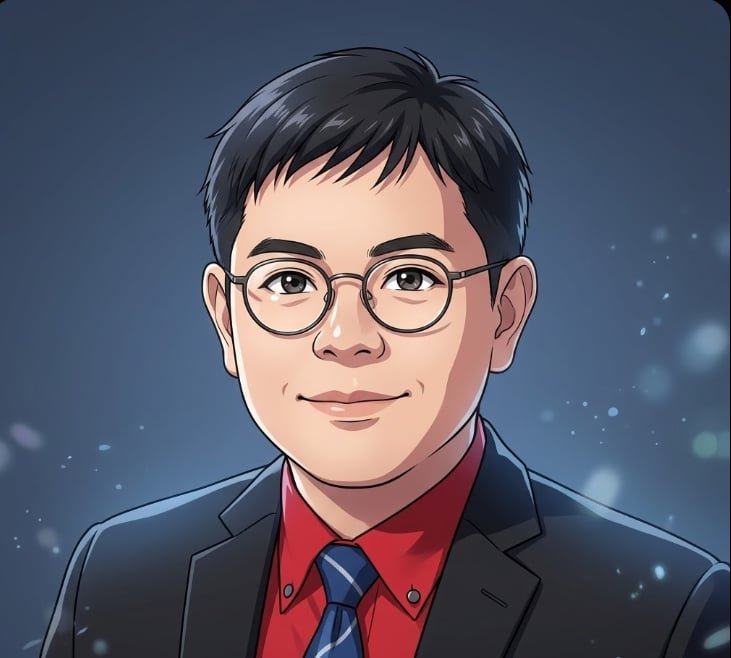
Tom Tokita is an AI Operations Architect based in Metro Manila, Philippines. He is president and co-founder of Aether Global Technology Inc., an enterprise Salesforce consulting firm. On weekends, he builds AI systems as a personal R&D practice, stress-testing what works in production and writing about the results. The guardrail patterns that survive that testing get published as open-source tooling on GitHub. This is his personal site, tokita.online.
01The journey
The Foundation (2010-2016)
I started where a lot of tech careers start: at the bottom. Technical support at a hotel infrastructure ISP, answering calls on rotating shifts, learning that the gap between "the system works" and "the customer thinks it works" is where most problems live. From there I moved into web consulting: WordPress, Salesforce CRM, client-facing project work. The kind of role where you learn to speak two languages: technical and human.
Then came digital media. I managed campaigns at a digital media agency on DFA/DFP platforms, got acquired into a global IT firm, and kept running campaign lifecycles: planning, execution, analysis, reporting. After that, a detour into distribution management: opening branches, managing satellite teams, running sales reports. Not tech, but the same lesson every time. Technology only matters if it works in the real world. Systems only matter if people actually use them.
The Enterprise Years (2016-2023)
I moved into project management, then took on a dual role as PM and solutions architect for WordPress and Magento builds at a digital agency. I launched their support structure and implemented a PM tool (Teamwork) to bring order to the chaos. That was the shift from "managing projects" to "understanding the architecture underneath them."
Then came Salesforce. In previous consulting roles, I started as a PM implementing Salesforce for enterprise clients, got promoted, and built a managed services practice from scratch: the entire end-to-end process, from sales inception to closing. KPIs, dashboards, forecasts, staffing models, escalation paths. None of it existed before I arrived.
As Delivery Director, I led programme delivery for large-scale digital transformations. The one I am most proud of: a record-time Salesforce Service Cloud deployment across 3 call centres in 89 days for a major national airline. That programme also covered Sales Cloud, Experience Cloud, Marketing Cloud, Slack integration, SMS notifications, and consent management.
The AI Obsession (2024-Present)
In July 2024, I became President of Aether Global Technology Inc., the Salesforce consulting firm I co-founded. President sounds like you get to delegate. In reality, I run strategy, sales, delivery oversight, P&L, and contracts. I also administer our Google Workspace, configure our Jira, maintain our servers, built our company website, handle marketing, and research new technology. That is 10 roles before lunch.
I did not hire 9 people. I started with a CLI tool. Learned MCP. Encountered a bug, fixed it. Saw a gap, built for it. Iterated. What began as solving immediate problems evolved into a personal AI operations system. My daily driver. A living R&D lab where I test what works and what breaks, using my own company as the testing ground.
It was not planned. It was engineered out of necessity. And that pattern: address a pain, build something for it, iterate until it runs. That is the same one that has defined every chapter of my career.
02By the numbers
03What I do
AI consulting, enterprise technology, and production AI systems, based in Metro Manila, serving globally.
Aether Global Technology (Salesforce consulting partner) + AI operations architecture. Based in Metro Manila, Philippines.
04The philosophy
There is a pattern I have seen across every AI project that stalls: someone fell in love with the model and forgot about the operations. They built a brilliant demo, showed it to the board, got the budget, and then spent the next twelve months wondering why it does not work at scale. The model was never the problem. The pipeline was. The data quality was. The monitoring was. The human-in-the-loop process was.
That is why my approach is production-first. If it does not ship, it does not count. I would rather have a system that works reliably at 80% with proper monitoring and fallback than a 95% model that nobody can maintain, nobody can debug, and nobody trusts enough to put in front of a real decision.
I also believe guardrails get built on day one, not bolted on after something goes wrong. My AI system has anti-fabrication protocols at its core, not because a regulator asked for them, but because I use the output in real work with real stakes. "It sometimes makes things up" is not a quirk. It is a liability. Build the safeguards first. Then build the features.
I write from a Filipino lens because the AI conversation here needs more builders, not more spectators. The simplest approach that works is always better than the most impressive approach that might.
05Skills & credentials
- consultingAI Operations, Enterprise Consulting, Systems Architecture, Project Management
- ai / genaiClaude, Gemini, Google AI Studio, MCP Servers, GEO
- platformsSalesforce, MuleSoft, Jira, WordPress, Magento, Mailchimp, Google Analytics
- devPython, HTML/CSS, Slack, Hostinger
- credentialsGemini Certified Educator, Jira Fundamentals, Scrum Foundation Professional, Datorama PM, SF Business Admin Specialist, SF Reports & Dashboards Specialist
06Open source
- ai-agent-gatesPre-Action Gate for AI Agents -- open-source starter code for the gate pattern I use in production. Python, no dependencies, works with any LLM framework. Full walkthrough: how to build a pre-action gate.
07Want to work together?
Whether it is enterprise consulting, a speaking engagement, or a conversation about AI operations, I am easy to reach.